
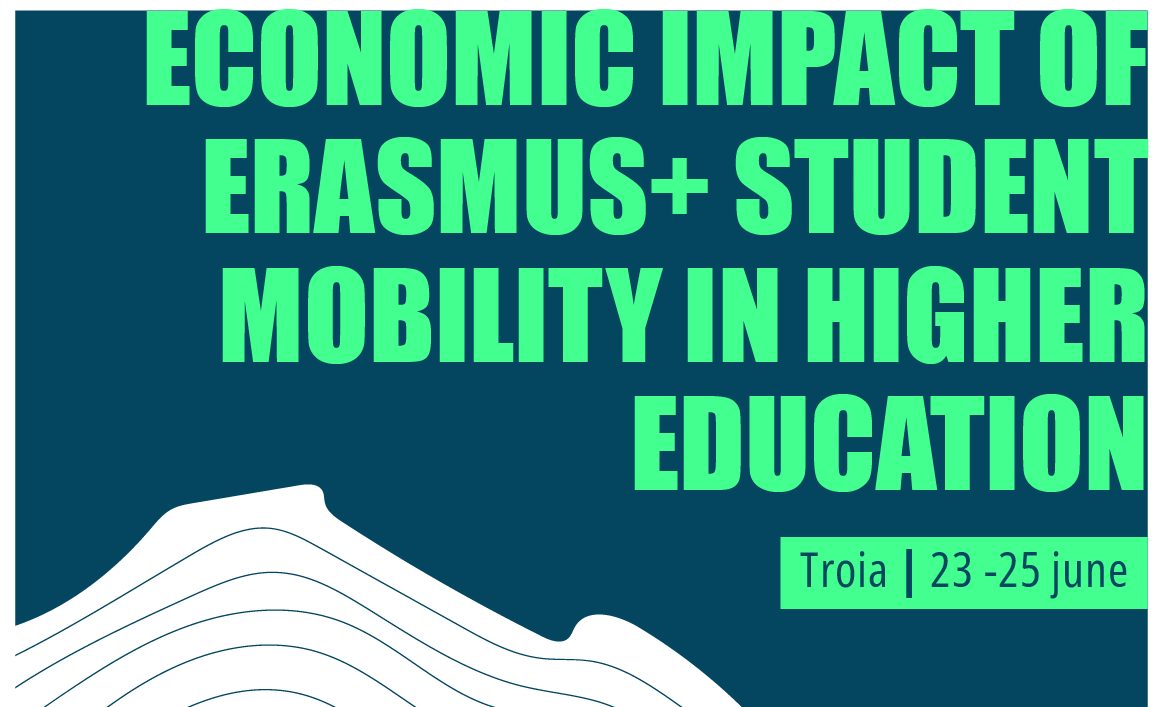
How can we effectively respond to rapid changes in our field and drive real impact? The answer lies in collaboration. Organized by the Institute for Higher Education, I.P., in cooperation with the Academic Cooperation Association (ACA), this two-day conference brings together experts and stakeholders to explore the socioeconomic impact of Erasmus+ and international student mobility.
This year, the conference will be held in the Troia Peninsula, a stunning beach destination in Portugal located about an hour south of Lisbon (just across from Setúbal), famous for its endless white sands and crystal-clear waters.
For more information about this conference, we are available in the e-mail below:
The conference aims to provide a collaborative platform to analyze and leverage the broader effects of international education. The core objectives are:
-
Evaluate Impact Methodologies: Examine the latest evidence, data sources, and conceptual approaches used to assess the socioeconomic impact of student mobility on individual, economic, and regional levels.
-
Align Mobility with Labor Markets: Explore institutional strategies, national policies, and funding frameworks that link mobility to graduate employability, skills development, and regional economic needs.
-
Foster Strategic Partnerships: Discuss how mobility can drive university–business–government collaboration, strengthening ties with employers and social partners.
-
Maximize Erasmus+ Instruments: Identify ways to leverage specific tools—such as traineeships, civic engagement, and joint programs—to ensure long-term socioeconomic benefits.
By the end of this event, participants and institutions will achieve:
-
Enhanced Data & Analytical Skills: A deeper understanding of how to measure and report the tangible social and economic returns of mobility programs.
-
Actionable Institutional Strategies: Practical operational models to better integrate mobility outcomes with local development and employability goals.
-
Strengthened Networks: New institutional partnerships between academia, businesses, and government bodies to address evolving labor market demands.
-
Optimized Program Delivery: Clear insights on how to strategically deploy Erasmus+ instruments to maximize long-term impact.
Tuesday, 23 June 2026: Tróia Design Hotel
14:00 and 15:00 | Transfer from Lisbon airport
15:30-16:30 | Welcome coffee and registration
16:45-16:50 | Opening remarks and scene-setting:
- Cristina Perdigão, Vice-President, Institute for Higher Education, I.P.
16:50-17:50 | Keynote Session “Understanding the socio-economic impact of Erasmus+: evidence, insights and open questions”:
Socio-economic effects of Erasmus+ mobility at student level
- Giorgio Di Pietro, Associate Professor, University of Loyola, Spain
Economic value and policy implications of Erasmus+ student mobility: insights from Croatia, Germany, Hungary, Portugal, and Serbia
- Veronika Kupriyanova, Deputy Director, Academic Cooperation Association (ACA)
Q&A
17:50-18:00 | Day 1 wrap-up
18:45 | Departure from Tróia Design Hotel to the dinner venue
19:15-21:00 | Networking dinner – Herdade da Comporta
21:30 | Return to Tróia Design Hotel
Wednesday, 24 June 2026: Tróia Design Hotel
9:25 | Welcome back and introduction to Day 2
09:30-10:45 | Stakeholder panel: “Leveraging Erasmus+ mobility for social progress and economic growth”
This stakeholder panel will explore the diverse effects of international (credit and degree-seeking) student mobility at different levels. It will set the scene with the wider discussion on how impact is understood, prioritised, evidenced and strengthened across different levels: individual students, higher education institutions, national systems and the wider labour market and society. In doing so, it will prepare the ground for more focused discussions in parallel sessions.
- Wim Gabriels, Director, Erasmus Student Network (ESN)
- John Edwards, Secretary-General, European Association for the Applied Sciences in Higher Education (EURASHE)
- Marina Steinmann, Senior Expert, National Agency at the German Academic Exchange Service (DAAD), Germany
- Olivier Marichalar, Responsible for studies, press and communications, Campus France, France
Moderator: Irina Ferencz, Director, Academic Cooperation Association (ACA)
10:45-11:15 | Networking break and transition
11:15-12:45 | Parallel sessions: Local and institutional strategies maximising socio-economic impact of mobility
Session 1. International student mobility as a driver of regional research and innovation ecosystems – ingredients for success
This parallel session will explore strategic connections between international (credit and degree-seeking) student mobility, and local research and innovation systems, building upon university partnerships with local actors such as research centers, regional authorities, innovation agencies, clusters, SMEs, and start-ups.
- Einar Seime Stokka, Senior Advisor, Western Norway University of Applied Sciences, Norway
- Norbert Sipos, Associate Professor and Deputy Director of International Centre, University of Pécs, Hungary
- Bárbara Coelho Gabriel, Vice-Dean, Faculty of Mechanical Engineering, University of Aveiro, Portugal
Moderator: Antonija Gladović, Director, Agency for Mobility and EU Programmes (AMPEU), Croatia
Session 2. International student mobility as part of institutional strategies for talent development and graduate employability
The parallel session will explore how international student mobility can be approached more strategically as part of institutional efforts to develop talent, strengthen graduate employability and build links with employers, regions, and sectoral ecosystems.
- Enara Iriondo, International Projects Coordinator, IKASLAN mobility consortium, Spain
- Rui Branco Lopes, Head of International Relations Office, Coimbra Health School, Portugal
- René Teunissen, Head of Internationalisation -Senior Policy Advisor Internationalisation, Erasmus University Rotterdam, the Netherlands
Moderator: Simone Lepore, President, Erasmus Student Network (ESN)
12:45-13:45 | Networking lunch
13:45-14:10 | Student support and housing initiative in Portugal
- Andreia Godinho Lopes, Head for Student Support and Innovation Department, Higher Education Institute, Portugal
14:10-14:25 | Key takeaways
- Antonija Gladović, Director, Agency for Mobility and EU Programmes (AMPEU), Croatia
- Simone Lepore, President, Erasmus Student Network (ESN)
Moderator: Veronika Kupriyanova, Deputy Director, Academic Cooperation Association (ACA)
14:25-14:30 | Closing
- Irina Ferencz, Director, Academic Cooperation Association (ACA)
14:45 | Departure from Hotel Tróia Design
15:00-19:00 | Social programme and networking: BOAT TOUR
19:00 | Return to Hotel Tróia Design
Networking dinner in Hotel Tróia Design (TBC)
Thursday, 25 June 2026: Tróia Design Hotel
07:00-10:00 | Farewell Breakfast
08:00 and 09:30 | Departure from Tróia Design Hotel to Lisbon airport
Troia Peninsula
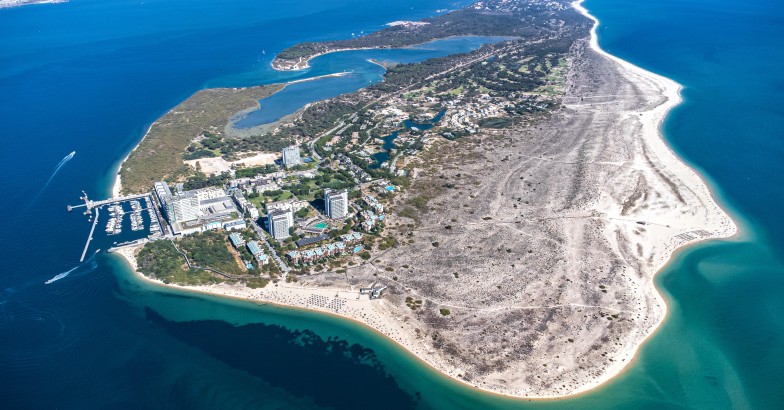 Foto de Erik Knoef no Unsplash
Nature & Wildlife
- Troia-Mar Beach: Located on the Atlantic Ocean side of the Troia Peninsula, Troia-Mar Beach boasts stunning views looking out over the Serra da Arrábida hills right in front.
- The Sado Dolphins: One of the peninsula’s unique features is the resident pod of bottlenose dolphins living where the Sado River meets the sea.
- Protected Reserves: The region sits between the Serra da Arrábida Natural Park and the Sado Estuary Nature Reserve. This location makes it an exceptional destination for birdwatching, hosting a wide variety of interesting local species.
- Carrasqueira: Located not far from the main resort area, this traditional fishing port is famous for its unique, irregular piers built on wooden stilts, offering a distinct glimpse into local maritime heritage.
History & Gastronomy
- Roman Ruins of Troia: Dating back to the 1st Century, these archaeological remains reveal that the peninsula was once the largest industrial complex for producing fish conserves and garum (fish sauce) in the Western Roman Empire. It stands as historical evidence of the region’s long-standing connection to the fishing economy.
- The Regional Culinary Scene: Following the peninsula’s main road leads to famous neighboring beaches like Comporta, Carvalhal, and Pego. These areas are packed with excellent terrace restaurants right on the sand, specializing in fresh grilled fish and traditional Alentejo coastal snacks.
Sports & Leisure
- Visitors can enjoy a vibrant marina perfect for windsurfing, or play at the championship Troia Golf course, designed by Bobby Jones and ranked among the best in Europe.
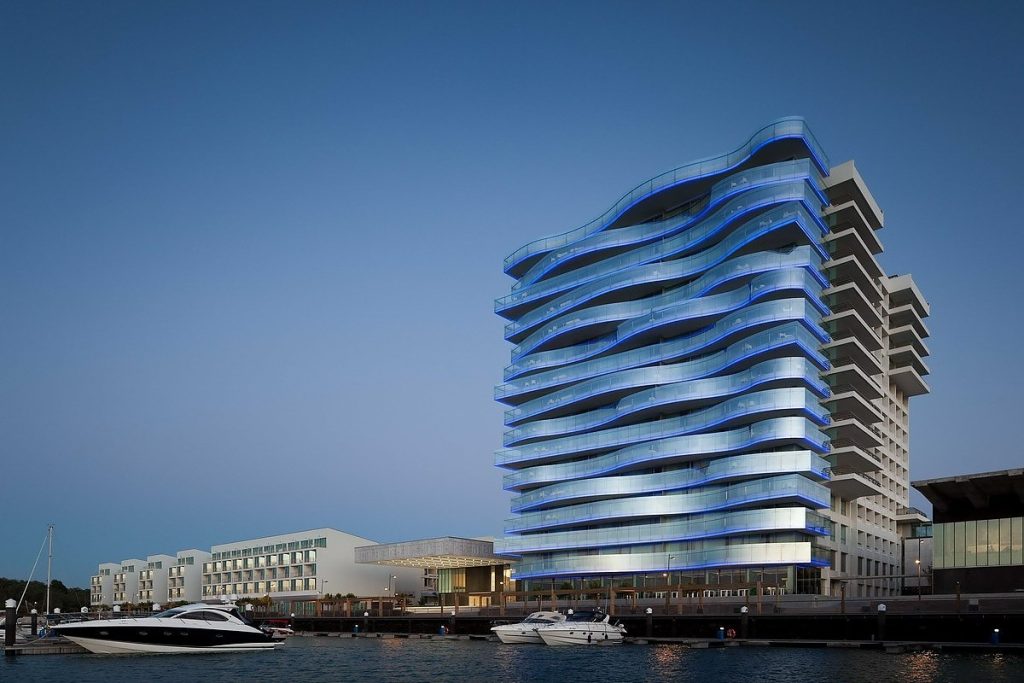
Nestled between the Atlantic Ocean and the river Sado, a mere one hour from Lisbon, a place where nature has been generous, the TROIA DESIGN HOTEL is a resort where the purity of the design is present in every detail, merging perfectly with nature.
- Address:
Marina de Tróia – Península de Tróia
7570-789 Carvalhal
Grândola – Portugal
- Contact:
Call to a national landline network, or international call if outside the EU
Free Transfer from/to Lisbon Airport (provided by IES)
- Tuesday, 23 June 2026 – 14:00 and 15:00 (Form Airport to Troia Design Hotel)
- Thursday, 25 June 2026 – 08:00 and 09:30 – (From Hotel Tróia Design to Lisbon airport)
For participants traveling independently:
There are two main approaches: via Setúbal (crossing the river by boat, which is the fastest and most scenic route) or entirely by land (driving around the peninsula via Alcácer do Sal).
1. Via Setúbal + Catamaran (Fastest & Most Practical)
- By Taxi / Uber (Direct from Airport):
Take a 45-minute ride from Lisbon Airport directly to the Atlantic Ferries Terminal .
-
By Train (Fertagus):
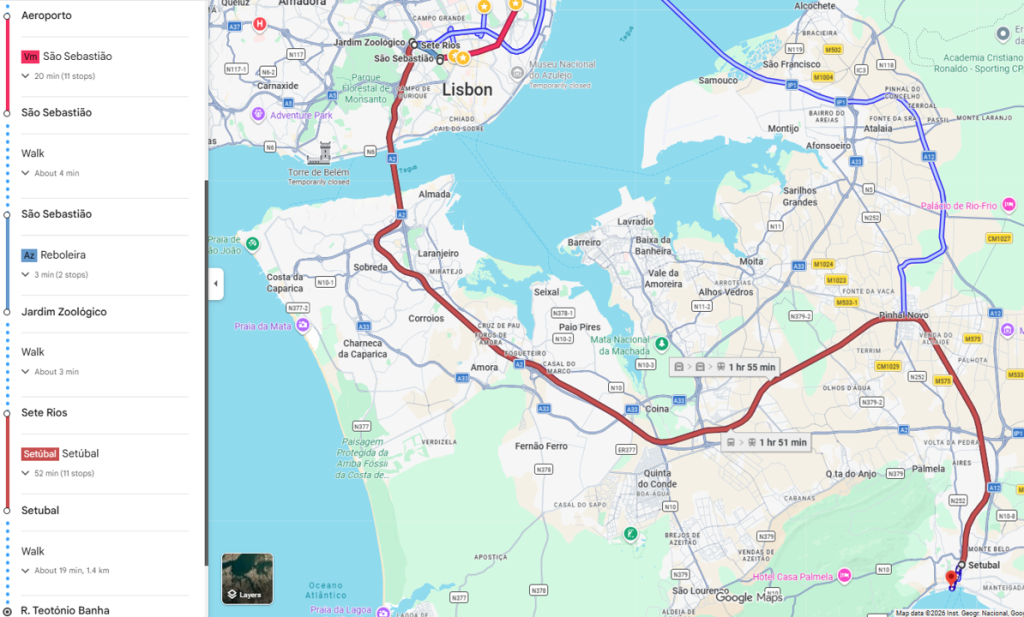
Take the Metro (Red Line) from the airport, transfer to reach Roma-Areeiro, Entrecampos, or Sete Rios stations, and catch the Fertagus train to Setúbal (approx. 1 hour).
-
By Bus (Carris Metropolitana):
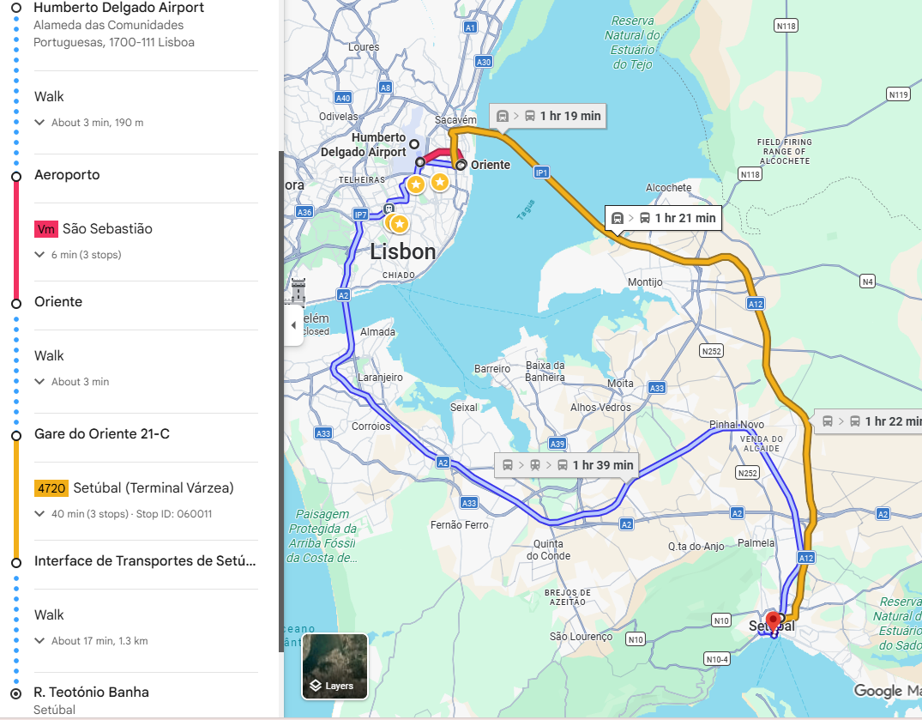
Take the Metro (Red Line) from the airport to Gare do Oriente and catch the direct fast bus to Setúbal (Line 4720, approx. 50 minutes).
-
Getting to the Dock:
Please note that Setúbal’s train and bus stations are about a 20-minute walk from the Catamaran terminal. We highly recommend taking a quick 5-minute taxi, Uber, or Bolt from the station to the dock (Doca do Comércio), especially if you are carrying luggage.
-
The River Crossing:
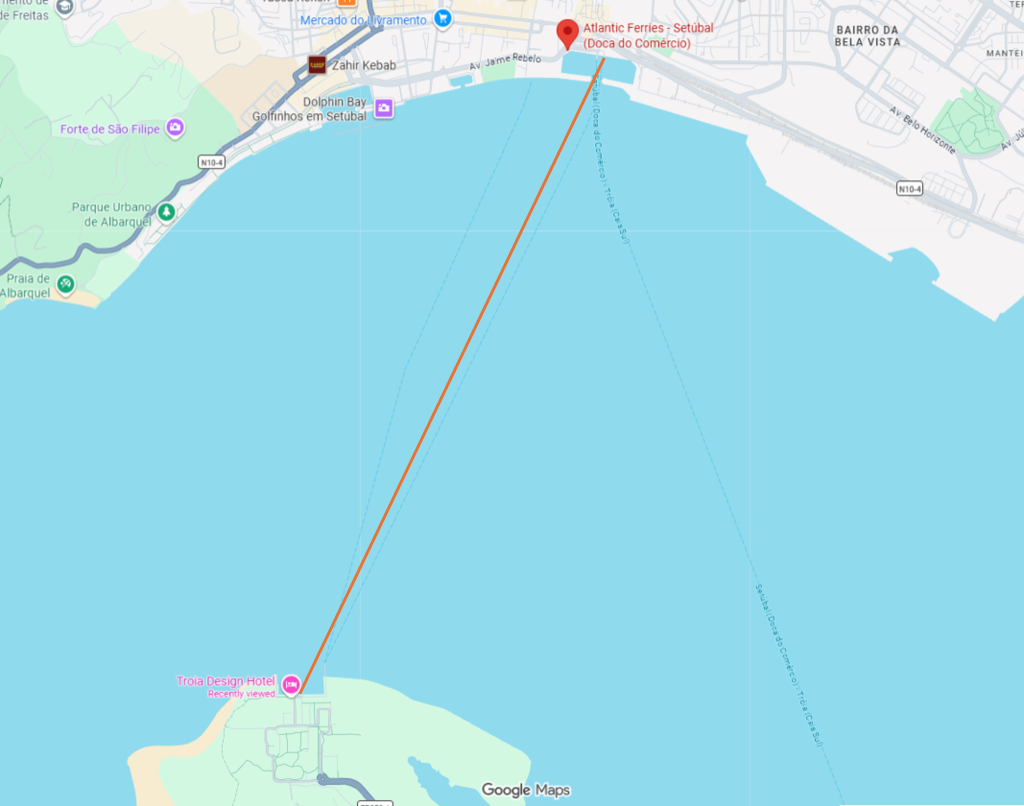
Board the Atlantic Ferries Catamaran. The scenic crossing takes just 15 minutes and drops you off at the Troia Marina, a 2-minute walk from the hotel entrance.
Note: The passenger catamaran runs regularly throughout the day, but the schedule may vary. We suggest checking the timetables on the official website
2. Rental Car / Driving via Car Ferry (Best Combo for Drivers)
If you are renting a car at the airport but want to avoid the long drive around the peninsula, you can drive to Setúbal and cross by boat.
- The Drive:
Drive from Lisbon Airport to the Setúbal Car Ferry Terminal (Doca do Comércio) via the A12 or A2 highway (approx. 45 minutes).
- The River Crossing:
Drive your car onto the Atlantic Ferries Vehicular Ferry. The crossing takes about 25 minutes. We suggest checking the timetables on the official website
- Arrival:
The ferry docks at Cais Sul (Troia). From there, it is a quick 3-minute drive straight to the hotel parking lot.
3. By Car (Entirely by Land)
- If you are renting a car at the airport and prefer to drive, take the A2 highway south, exit toward Alcácer do Sal, and follow the N253/R253-1 highways all the way up the peninsula.
- Travel time: Approximately 1 hour and 45 minutes (134 km).
Social and Networking Programme
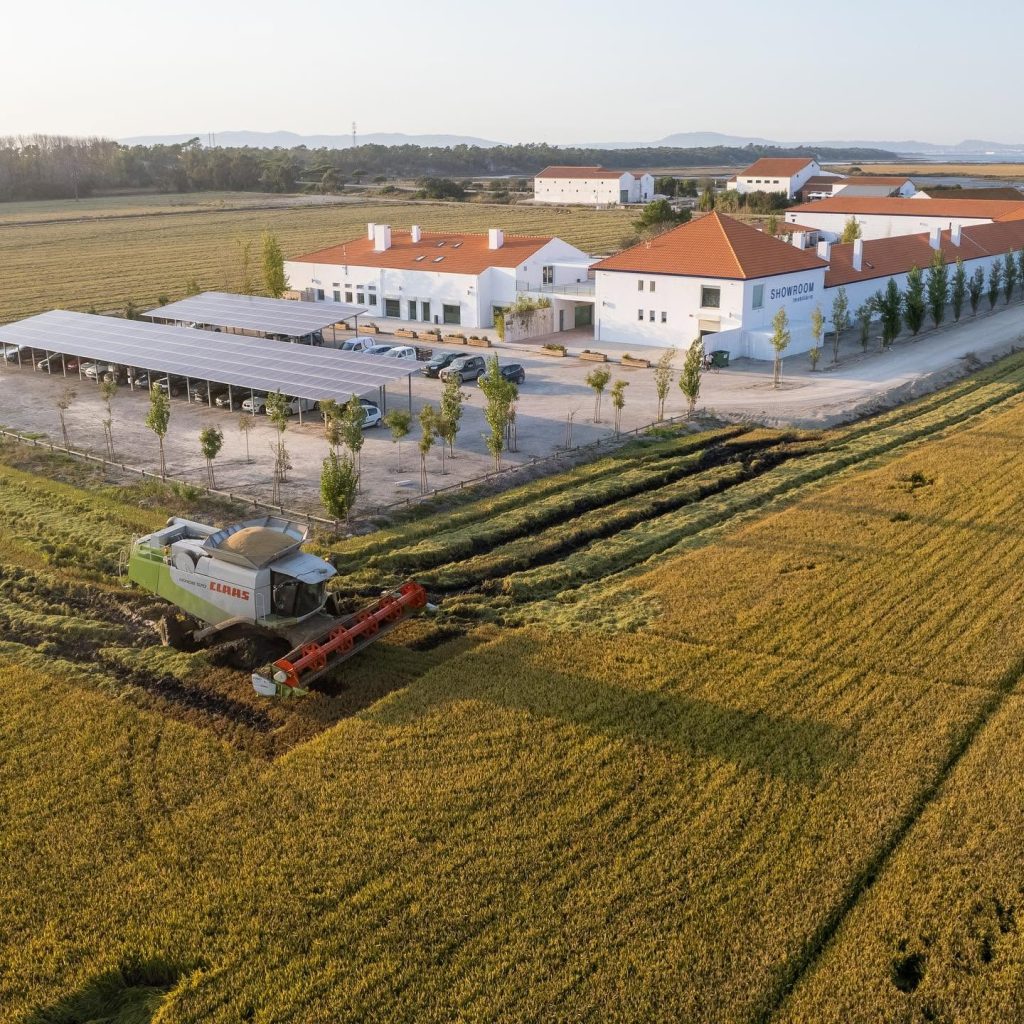
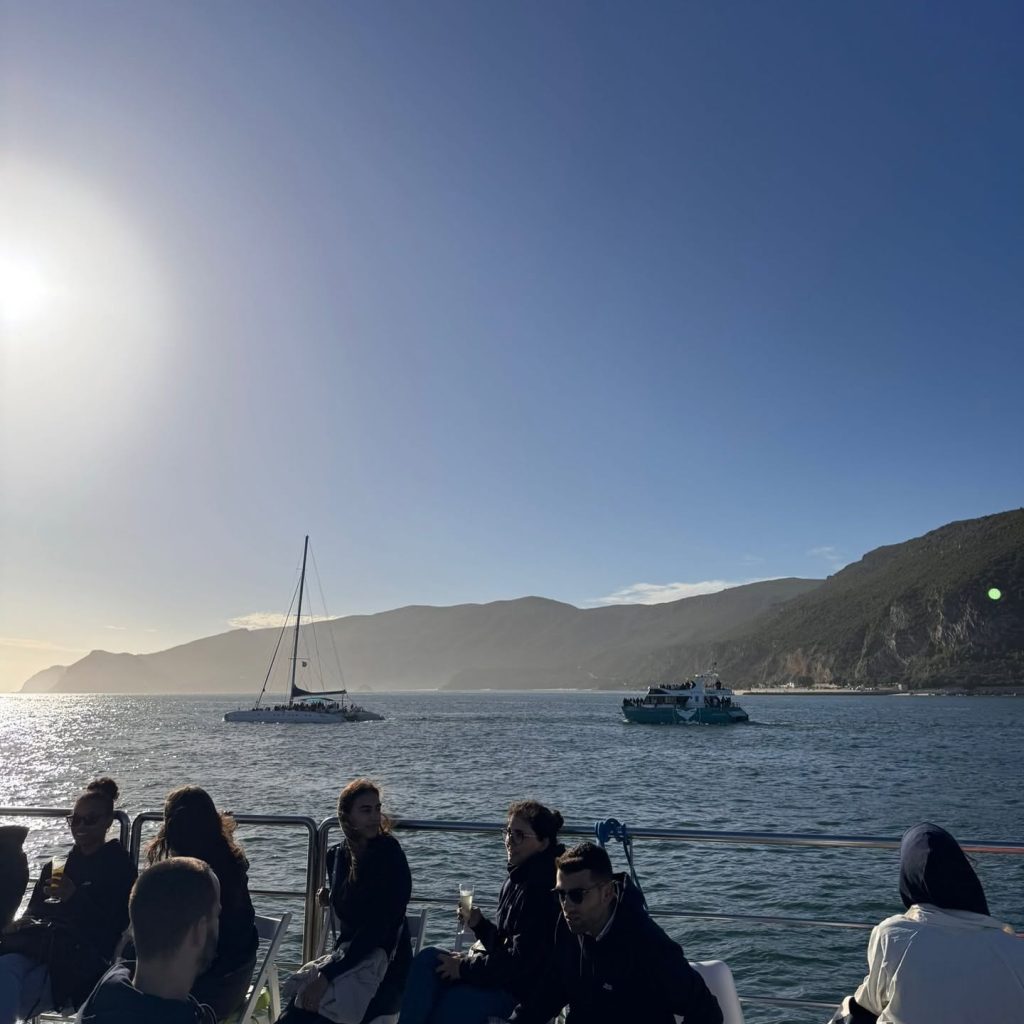
Photo: Breathe Arrábida
Embark on a scenic boat cruise along the Troia Peninsula, offering breathtaking panoramic views where the calm waters of the Sado River meet the stunning Atlantic coast and the Arrábida hills. This relaxing journey will take you through the heart of a protected nature reserve, providing a unique perspective of the landscape and the opportunity to spot the region’s famous resident dolphin community in their natural habitat.
-
Boarding Time: 15:00
-
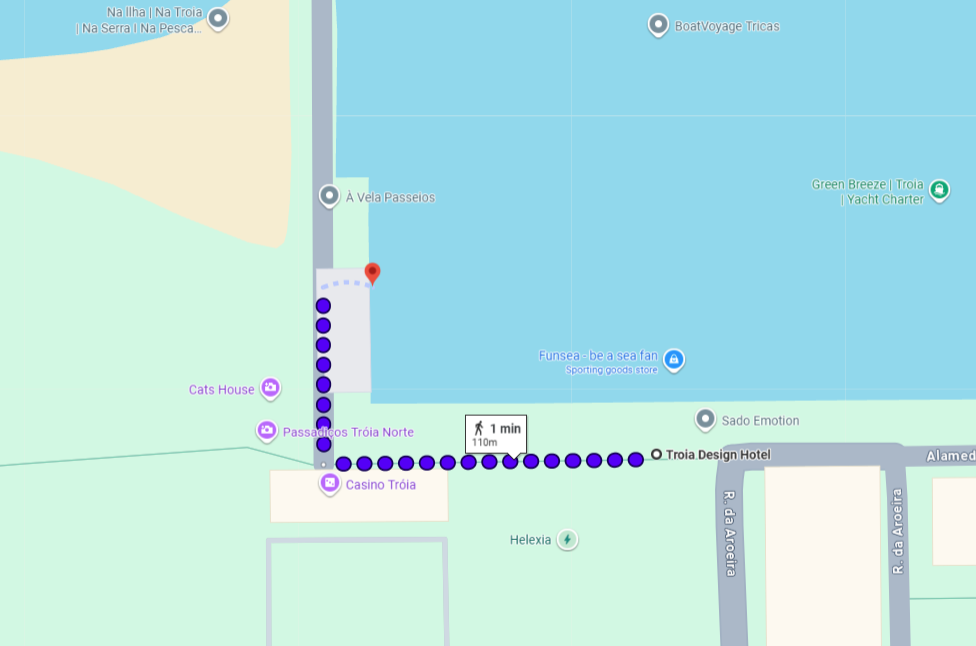
Location: In front of the Casino, right next to the Troia Design Hotel